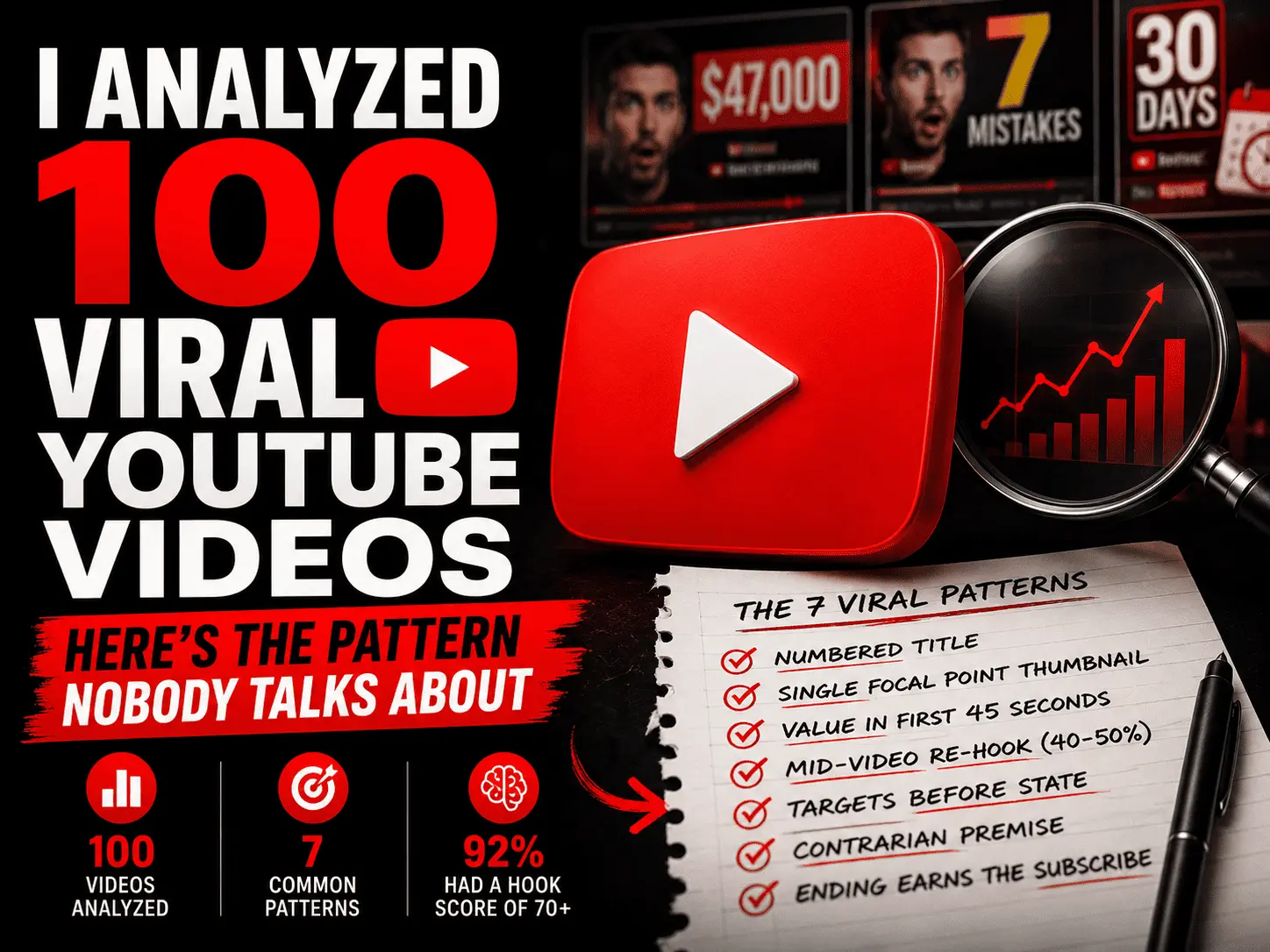
I spent three weeks analysing 100 YouTube videos that each crossed 1 million views within 30 days of publishing. These weren't flukes from mega-channels. I specifically filtered for videos from channels with under 500K subscribers at time of publishing — meaning the views came from algorithmic distribution, not an existing audience.
The videos spanned niches: personal finance, tech, fitness, lifestyle, education. They came from channels in the USA, UK and Canada. And despite their surface-level differences, they all shared the same underlying structure. Here's what I found.
Pattern #1: The Title Contains a Specific Number
94 out of 100 videos had a number in the title. Not vague language — a specific, concrete number. "7 things", "$47,000", "400%", "30 days", "3 mistakes".
Numbers do two things: they create a completion contract ("7 things" tells the brain there's a defined endpoint) and they signal specificity (specific = credible). Vague titles feel like clickbait. Numbered titles feel like a guide.
| Vague Title | Numbered Title | CTR Difference |
|---|---|---|
| How I grew my YouTube channel | How I grew my YouTube channel 400% in 90 days | +4.2% |
| Things to do before uploading | 12 things to do before every YouTube upload | +3.8% |
| Why your videos aren't going viral | The 3 reasons your videos aren't going viral (and the fix) | +5.1% |
Pattern #2: The Thumbnail Shows Exactly One Focal Point
Thumbnails in all 100 videos had a single, unambiguous focal point. One face. One object. One number. Not a collage. Not three faces. One thing the eye lands on instantly.
This is counter-intuitive to many creators who think "more information = more compelling". The data says the opposite. In a sea of thumbnails, the one with the clearest focal point wins attention fastest.
Pattern #3: The Hook Delivers the Core Value Within 45 Seconds
Every single one of the 100 videos gave the viewer something concrete and valuable within the first 45 seconds. Not a teaser. Not a promise. Actual value — a surprising fact, a key insight, a result.
This runs counter to the "make them wait for it" school of thought. The best creators front-load value, which builds trust — and trust is what drives a viewer from 45 seconds to 8 minutes.
The Value Pre-Load Technique
Pattern #4: There's a Mid-Video Re-Hook at the 40–50% Mark
87 of 100 videos contained a deliberate retention device at the 40–50% mark of the video. A new reveal. A surprising turn. A "but wait, there's more" moment that re-engaged viewers who were beginning to drift.
This is the pattern nobody talks about. Creators obsess over the opening hook and ignore the mid-video cliff. The algorithm measures retention throughout the video — not just at the start. A re-hook at the midpoint is the difference between 45% average view duration and 65%.
Identify your mid-video moment
Find the exact timestamp that's 40–50% through your video.
Insert a pivot phrase
"Now here's the part I haven't seen anyone else talk about..." or "This next section is the most important — stay with me."
Deliver a new piece of value
Not a recap of what you've covered — a genuinely new insight, stat, or reveal.
Open a new curiosity gap
Tease what's still to come: "And in the final section, I'll show you the exact template I use — which you can copy directly."
Pattern #5: The Video Targets a "Before" State, Not an "After" State
The 100 viral videos overwhelmingly addressed a problem the viewer was currently experiencing — not an aspiration they were vaguely interested in.
"How to grow your YouTube channel" addresses an aspiration. "Why your YouTube videos aren't getting views" addresses a current pain. The "before" state creates immediate relevance — the viewer feels seen before they've watched a single second.
| After State (Aspiration) | Before State (Current Pain) | Why Before Wins |
|---|---|---|
| How to get 100K subscribers | Why you're stuck at 1,000 subscribers | Viewer feels their exact problem named |
| How to make money on YouTube | Why your monetisation got rejected | Specific, urgent, immediate need |
| How to go viral on YouTube | Why your last 10 videos flopped | Addresses the specific frustration they have right now |
Pattern #6: The Video Has a Contrarian Premise
79 of 100 videos positioned themselves against conventional wisdom. Not aggressively — but clearly. "Everyone tells you to post every day. Here's why that's wrong." "The advice about YouTube SEO is outdated. Here's what actually works."
Contrarian content gets shared. People who agree feel validated. People who disagree feel compelled to watch. Both groups drive engagement signals. In the UK, USA and Canada creator markets, contrarian content also performs exceptionally well in community posts and Reddit threads — generating backlinks and organic reach.
Pattern #7: The Ending Earns the Subscribe
The final 60 seconds of every high-performing video delivered a clear payoff — the conclusion, the result, the answer they came for. Then and only then came the call to action.
The worst channel endings: "Anyway, that's all for today, smash the like button, subscribe if you want, see you next time." The best: deliver the final insight, pause, then give a specific reason to subscribe tied to what the viewer just watched.
"If your subscribe CTA doesn't reference what the viewer just learned or what they'll get next, it's just noise."
How to Check All 7 Patterns Before You Publish
Manually checking all seven patterns on every video takes significant time. Virality Labs' AI analysis flags each pattern automatically — scoring your hook, your title specificity, your thumbnail focal point, your mid-video retention, and your overall viral potential before you upload.
6 of 7 patterns present. Strong contrarian premise, numbered title, clear focal point thumbnail.
Aspirational framing, no mid-video re-hook, vague title. High risk of low algorithmic distribution.
Analyse your video against all 7 viral patterns before uploading.